The basics to owning a horse part 1 feed/water/shelter
- thatcrazyhorsekid2
- Jul 6, 2023
- 4 min read
I hope your sitting down because this is going to be a long one!
If your interested in purchasing your first horse, here is the guide your going to want to read! I will be posting every week one section of this guide. There are many things that are needed when owning a horse, starting with the number one, most important, obvious thing, pasture. So stay tuned for this weeks post:
Pasture space, location, water & shelter!
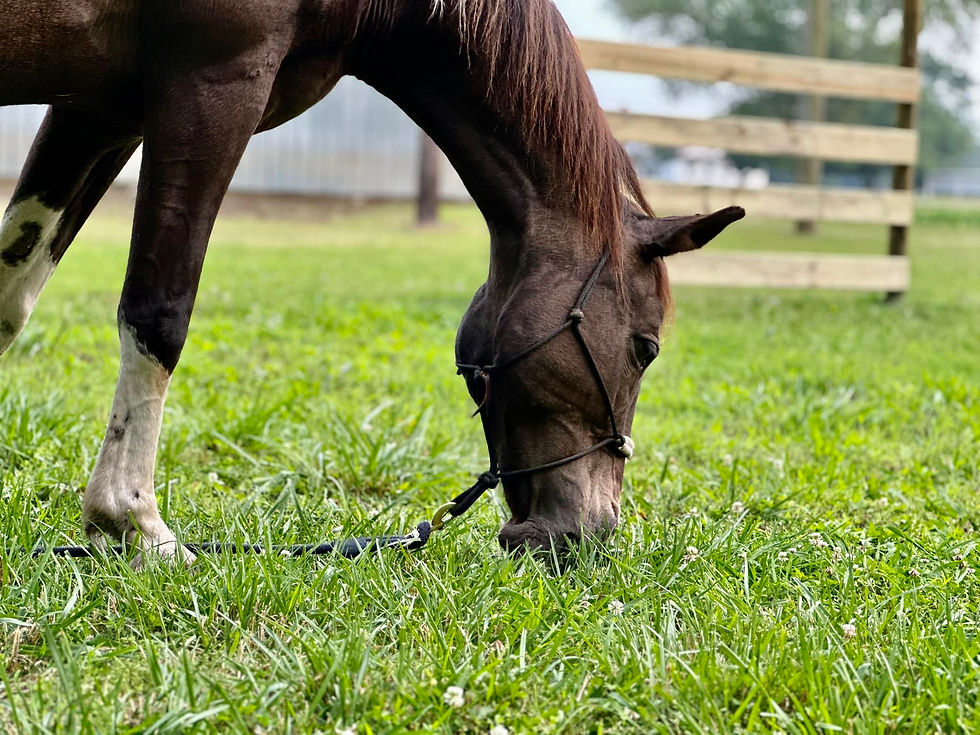
The first most important thing you need when owning a horse, is a pen. Horse pens vary depending on the horses energy, weight, and needs. For example, if you have an underweight horse, you might need more grass. Or if you have a young horse, you may need more acreage and pasture mates. Maybe if you have a less domestic horse, they may not require a shelter, where as a senior horse would greatly prefer one! One thing a lot of people believe when it comes to owning horses is that they NEED other horses. Which yes, is true. A horse does need other horses in their life, BUT, say you cannot afford another horse or do not have the space for two! In my personal opinion, goats make just as good pasture mates as other horses do! They are small, easy to buy, and don't need grain. The downside to owning goats is they tend to escape fences often. However, it is infect possible to keep a goat in a double or triple wire electric fence. A single wire on the other hand....most likely not gonna happen! This of course, depends on the horse though! My mare is a more independent horse so she is currently homed with three goats, she does perfectly fine! But I have also known other horses to go crazy being alone in a pasture! Like everything else, depend on the horse!
Horses are different than humans in so many ways, one being, their system works off of water and movement. A horse needs water to survive, more so than food. One of the most important things to have when owning a horse, is clean, fresh water. If your in winter, you will need to purchase a water heater to keep your trough from freezing, though in an emergency, a horse will lick ice to hydrate itself. If your in summer, you will need to keep the water somewhat cold and clean from Alge. Keeping your horses trough clean is critical to prevent from EPM, a contagious disease caused in horses from dirty water. In the hot summer months, I like to scrub my trough every week with disinfectant soap, and add a cup of apple cider vinegar to help with digestion. A horse typically drinks somewhere from five-ten gallons of water per day. This can vary depending on weather, horses activity level, horses weight, and many more factors.
Correct grain amount is critical when it comes to caring for equine's. Grain comes in thousands of different colors, shapes, and brands. I currently use the Purina Equine Senior grain. Though it depends on your horses size, breed, activity level, and age. Young horses tend to need something to build muscle and boost healthy growth, where seniors tend to need a food to help add weight and promote over all health. The amount of grain your horse eats it something that cannot be done carelessly. I would recommend researching, contacting someone, or asking a vet the proper amount to feed you specific horse. I prefer to soak my horse feed for 1-2 minutes before feeding to turn it to mush, making chocking less likely and allowing her to eat slower.
Hay is something that every horse needs during the winter and sometimes summer months! The average horse eats about four-five flakes of hay per day, without grass included. For a horse who eats grass all day, 1 flake at night is reasonable. Hay prices tend to range from $8-$12 (USA prices) per bale, depending on hay type, bale size, and if you are a regular buyer or not. Round bales tend to range from $30-$60 per bale (USA Prices)
Shelter is not required for owning a horse, however it is indeed preferred. If your looking into rescuing horse, shelter is typically required. Stalls are much appreciated by horses, but a run in shelter does the job just fine! Google may say 10'/10' stall is the only thing that can work, but my 15hh horse has a 11'/7' stall only 9' tall. She can move around just fine! There are so many debates on straw VS wood chips! I recently switched to wood chips due to the awful smell the straw held from the urine. It is important to make sure you use the correct pine shavings instead of Ceder or walnut. Ceder wood can cause raspatory issues due to the smell and walnut is the most toxic wood there is to horses! Horses have been known to die just from standing in walnut shavings. So stick to the basic pine or oak shavings, and I prefer the finer shaved ones. Shavings are easy to find free if you have a local wood worker who will reserve them for you. But you need to make sure the wood is safe before using them!
I hope you enjoyed this weeks read on horse care part 1. Check back next week for our horse care part 2 post!


Comments