Mud Fever-Treatment and symptoms
- thatcrazyhorsekid2
- Jul 2, 2023
- 2 min read
Updated: Jul 3, 2023
I'm sure all of us have heard of mud fever, rain rot, scratches, cracked heels, pastern dermatitis and so on! Well in a nutshell, they are all the same thing.
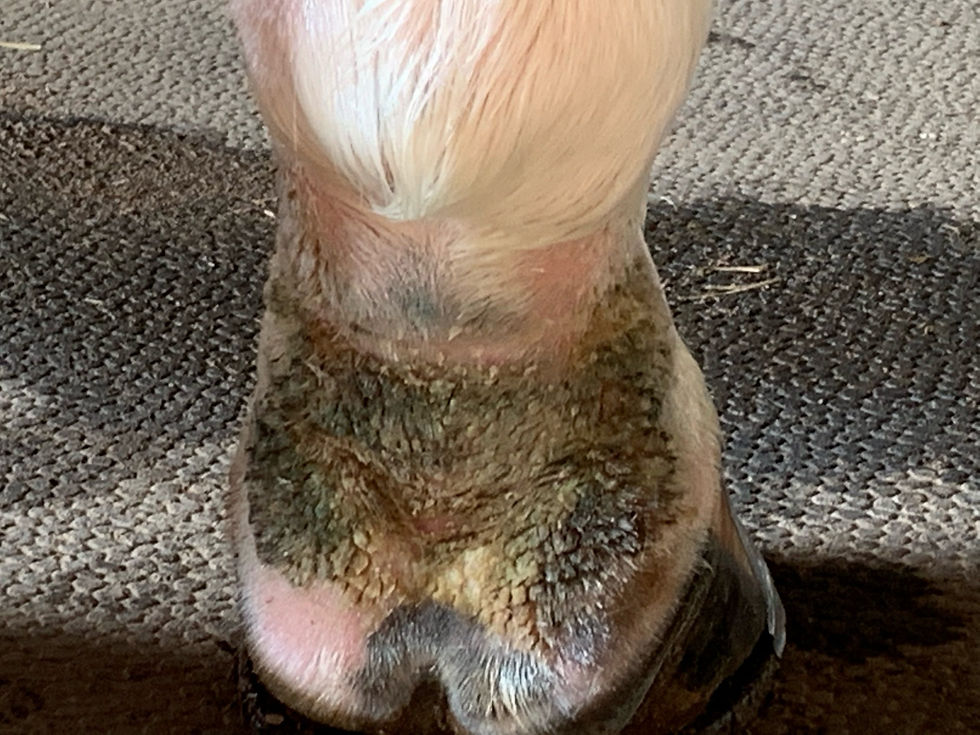
I recently noticed my mare losing skin right underneath her fetlock. I wasn't sure what to think so I didn't mess with it or do anything. After a few weeks, I noticed it getting a lot worse. So I showed my trainer, she immediately knew it was mud fever! Some may know, as I have mentioned it before, I have horrible, like horrible mud here. My immediate thought was, "its from all this terrible rain and mud!" Well I'm going to go ahead and just say it! Mud fever is NOT caused from mud! It is caused from the bacteria in the mud. When a horse is overly exposed to wet or moist areas which hold bacteria, the bacteria begins to make its way into the horses skin. Some symptoms include hair loss, scabby skin, peeling skin, reddish pink skin, or discharge from the effected area. Mud fever tends to appear on the legs but can also be found on other spots of the body.
I have personally found one of the best ways to treat mud fever, is first, scrubbing the effected area with dawn dish soap and a firm brush, (your horse may be sensitive so scrub gently). Second, apply EQyss Micro-Tek Micro-Tek Equine Spray for horses with skin conditions, 32 oz. at Tractor Supply Co. on effected area OR apply Animal Scents™ Ointment | Young Living Essential Oils once the area is dry after scrubbing. In addition to this, I use a Walmart Expert Gardener 16233: 2-Gallon Multi-Purpose Poly Tank Sprayer for Lawn, Home and Garden - Walmart.com filled with 10-20 DROPS of Oregano essential oil, (or you can use clove oil, vinegar, or frankincense oil!) fill with water and spray the ground of their pen. This also helps with thrush and swarming flies!
After all this, I hope I have assisted you in the healing of your horses difficulties. Good luck!


Comments